At Vibecon and Config, the Future of AI Design Looks Very Human
Two cities, two coasts, two design events on back-to-back weeks. Showcases where artists, creatives, designers, technologists and tinkerers gathered to explore the sights, sounds — and even smell — of the future of design. Even their names were similar.
There were also two different vibes. Over in New York City’s Lower East Side, Replit held its inaugural design conference, vibecon. Set inside the Canyon, a new 40,000-square-foot museum for video, sound, and performing arts, the event looked like a grungy, industrial crossover between an art gallery and a mad scientist’s lab. (Replit is a Reach portfolio company.)
The following week, in San Francisco’s fabled Moscone Center, where Steve Jobs and countless other tech luminaries have held court, Figma staged its annual conference. Running since 2019, Config boasts one of the most passionate and loyal user communities in tech — a cultural cornerstone for designers, developers and product builders across the globe.
Across two contrasting environments, similar threads kept coming up. The more capable AI becomes, it turns out, the more the oldest human skills and intuition matter — things like trust, attention, language, play and joy.
Words are now the primary design medium
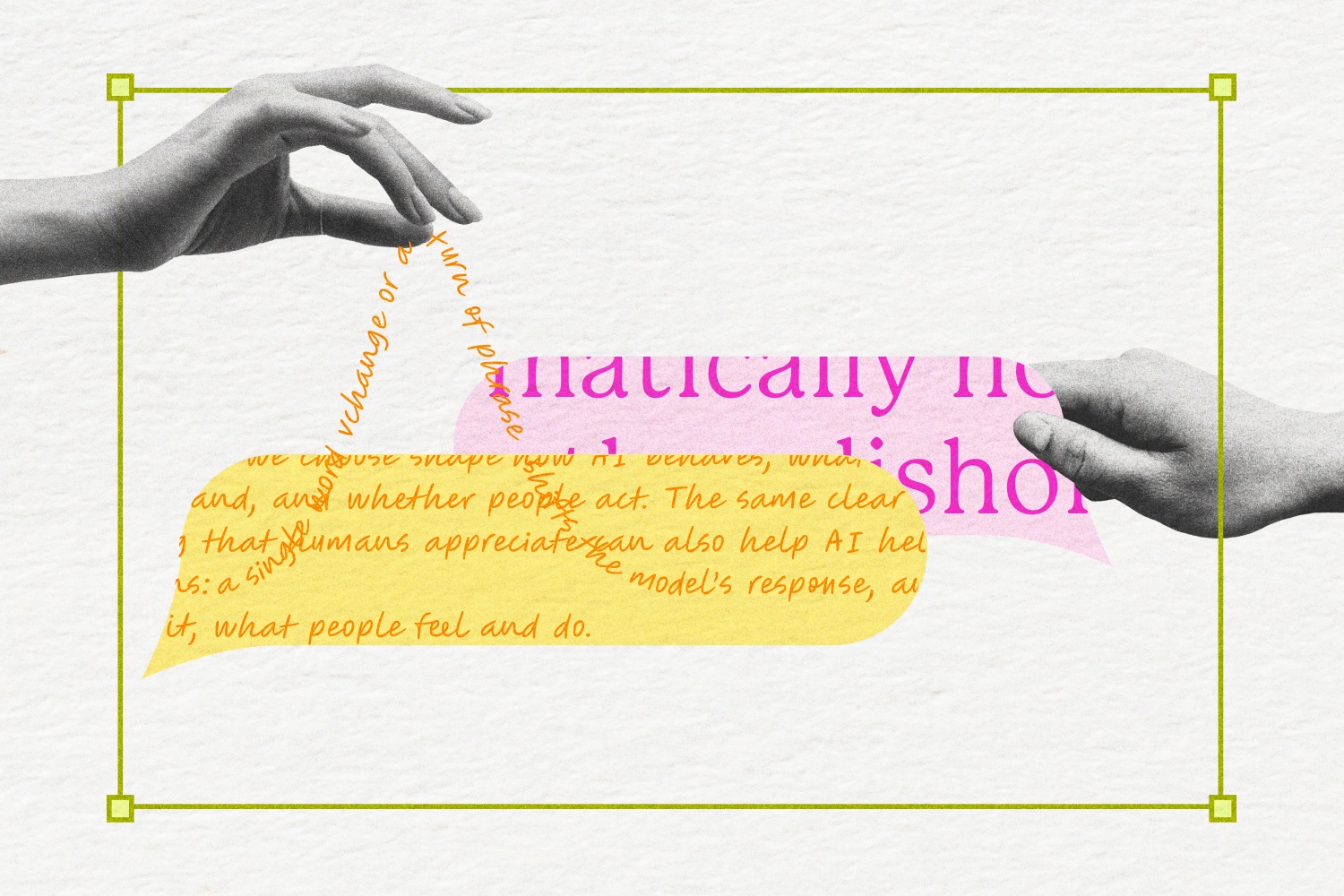
Writing is no longer just how we communicate about design. It is the design. The words we choose shape how AI behaves, what users understand, and whether people act. The same clear writing that humans appreciate can also help AI help humans: a single word change or a turn of phrase shifts the model’s response, and with it, what people feel and do.
A grounding principle in Claude’s constitution, for instance, is that it should be “diplomatically honest rather than dishonestly diplomatic,” noted Chelsea Larsson, Head of Content Design at Anthropic. Her team writes much of what governs how Claude responds — the prompts, system instructions, and the editorial rules behind every answer.
Words also imbue values, and values set mental models. Case in point: while “agent” is a popular term among engineers and in Silicon Valley, most users Anthropic surveyed did not see themselves as mere managers of a swarm of agents. That’s how the company landed on “Cowork” instead of “Agent” — a name that better reflects what most working professionals want from AI: a powerful colleague and amplifier.
Yet as writing becomes more core to design, another challenge emerges: How do you prompt an interaction you can’t name? It’s easy to take for granted the many interfaces that feel natural: the rubber-band “snap” feel when pulling down to refresh a mobile page, or the spin of a wheel to navigate a menu. But instructing an agent to build them requires words for what they are and why they work.
This is the problem that Johannes Mutter, Design Engineer at Mutter, is working to solve. For AI-native products, UI and UX design systems are no longer just visual components, but also language, context, defaults, workflows, and the structures agents can understand. His newest project, Interface Lineage, is essentially a dictionary for design. It traces common interfaces back to their origins and gives designers a shared vocabulary to use and prompt.
Designing for trust is more important than ever
Learning to speak to AI is only one side of the exchange. Just as important is designing AI that can communicate with humans — without words. After all, many of the signals we “read” to trust each other — eye contact, a firm handshake — are embodied and speechless. The challenge, as work becomes more autonomous, is to rebuild these cues innate to human interaction.
Cars offer one salient example. “When you remove the human driver,” explained Ryan Powell, Head of Design at Waymo, “you create a massive communication vacuum.” Without eye contact or body language to navigate a shared street, Waymo designed proxies for that missing dialogue. The car’s LIDAR dome emits a pedestrian crossing icon, a wordless “I see you, go ahead” to those waiting at the intersection. The interior displays pedestrians and traffic cones prominently, assuaging our concern: Does it see them? In doing so, riders develop trust in the car’s ability to recognize and navigate high-risk, transient obstacles safely.
But trust is also fragile, and AI can erode it fast. When Meta product designers first asked AI to enforce their design system, the same prompt would yield very different results, and quality collapsed on complex tasks. That inconsistency costs trust. Output that must be checked, corrected, and redone doesn’t save work; it makes more of it.
Which points to the deeper challenge: AI autonomy that still leaves room for human autonomy. Creative work has never been solitary. Take Brent David Freaney — the art director behind iconic album covers like Charli XCX’s brat — who makes work that isn’t finished until the culture picks it up and runs. “The audience is the medium,” he said. That lime-green square became the mood of a summer once millions of people decided it was. They were the final author.
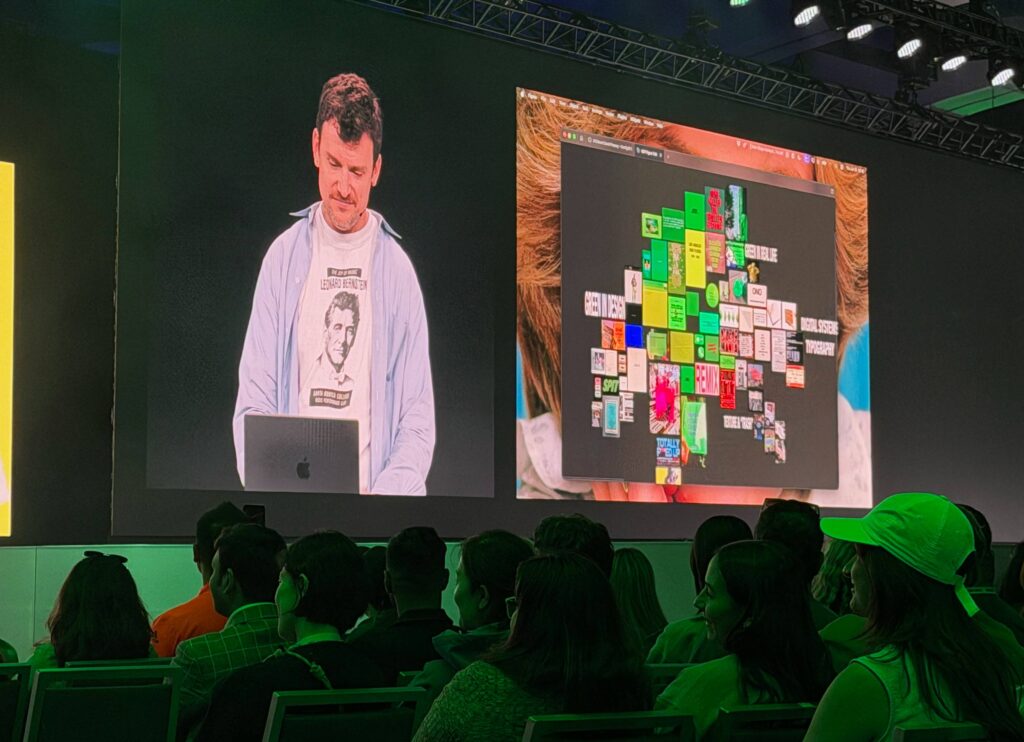
As AI becomes a new kind of collaborator in this shared process, designing for trust is what keeps humans in the exchange — able to see what’s happening, judge whether it’s sound, steer where it goes, and make the final call when something’s finished. Autonomy is not about working alone. It’s about staying in the conversation, even as we invite more voices into it.
The end of attention-maxxing
For decades, products have treated our attention as the most valuable metric, and operated on a simple assumption: the more of it they capture, the better. But as AI earns the trust that lets us take our hands off the wheel with confidence, the reward isn’t just that work gets done faster. It’s that we get our time back, free to focus on other things that matter.
Tech anthropologist Jésabel DC, who has logged over 4,000 hours studying how people navigate their digital lives, envisions a “low-tech” future — not a return to the tools of the past, but rather “low-touch” systems that are unobtrusive and ask less of our attention. Menial tasks like searching, sorting, formatting, and all the little steps between wanting something and creating it are rarely what deserves our focus in the first place, and what AI can handle.
Autonomy, in this sense, is the purest form of low-tech design. It handles rote work and leaves users with the part worth caring about. The old scoreboard valued time spent inside products. The better one counts time given back. The measure of a good AI product may be how little of it we end up using.
AI should give us all more time to play
So what should designers do with all that time back?
Meaghan Choi, Design Manager at Anthropic, offered the cleanest answer: Figure out what brings you joy in your work, protect that time fiercely, and automate everything else. Hand the machine the parts you’d never miss, and keep the parts you’d never delegate.
In other words, play more.
The projects on display at Replit’s vibecon made the case for reclaiming time to experiment, build things of no practical use, and mess around to simply see what AI is capable of. Even though most of them may never be shipped, play offers perhaps the fastest — and most fun — route to building fluency with new tools.
One artist, Tigris Li, made a machine that created a custom perfume from a memory verbally described to it — translating language into scent. Others dreamed up camera shots impossible to capture in the real world, and turned a piece of music into bespoke immersive visuals.
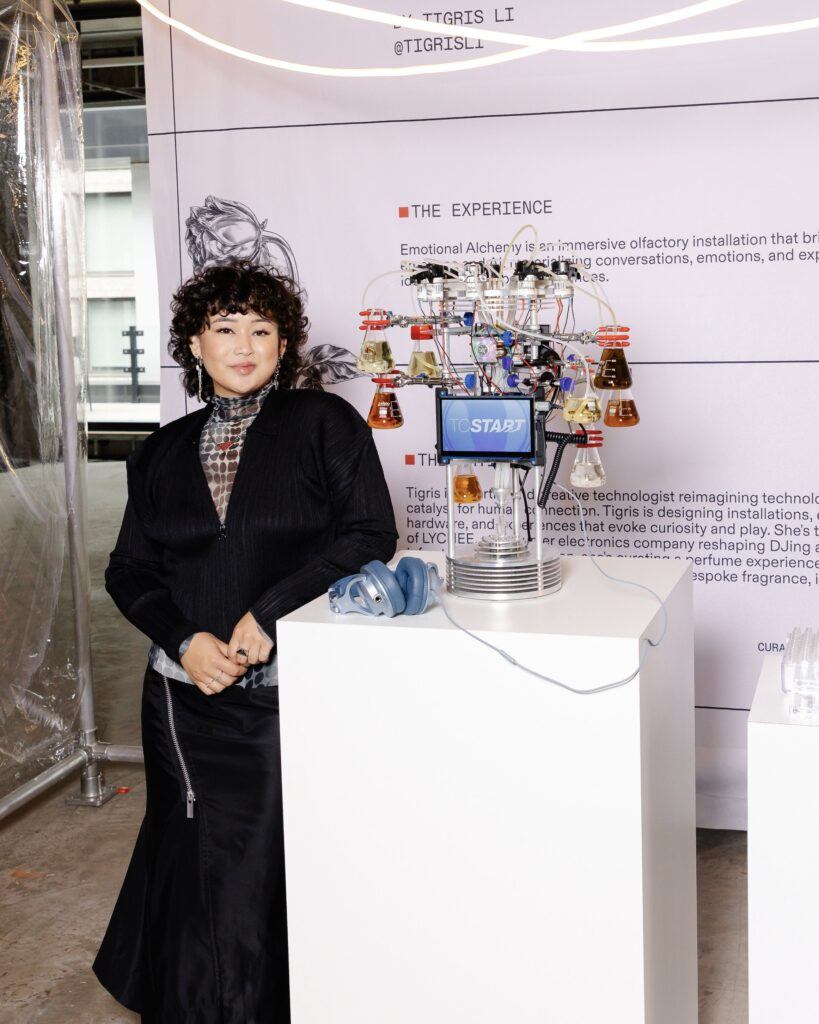
As people push a model to places it wasn’t built to go, that’s where it reveals its contours — what it grasps instantly, which associations it reaches for, and how it fails. Every experiment is a small probe about the system: its taste, its blind spots, the shape of its reasoning. The person who spends an afternoon coaxing a model to turn a memory into scent ends up understanding it more deeply than the one who only ever asks it to do their job.
Read the Latest
News and Insights