Accelerating Life Sciences Breakthroughs: Why We Invested in Manifold
Life sciences is at a moment of extraordinary potential. Genomics, imaging, multimodal data, and AI-powered modeling are reshaping what researchers can see and understand. Yet the speed at which new insights translate into breakthroughs has not kept pace with the growing amount of information available. In fact, Eroom’s Law (the inverse of Moore’s law) has shown that the cost of producing a new drug is increasing as technology has advanced.
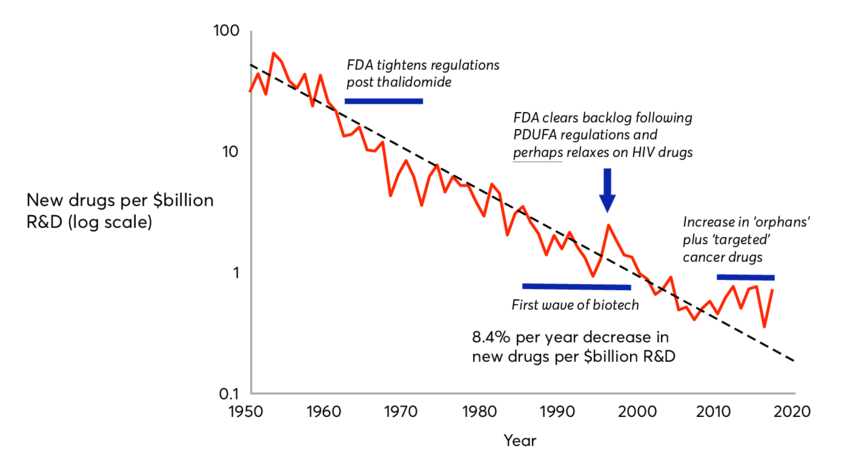
Today, what slows researchers down isn’t the science. It’s the gap between the questions they want to ask, and the many tools and systems they need to navigate in order to test their hypotheses and get answers.
At Reach, this phenomenon is not new to us. When data is abundant but difficult to access and understand, the burden falls on the experts who are already stretched thin. Teachers are overwhelmed with data dashboards to personalize instruction for their students. Physicians are reliant on clunky EHRs to make sense of patient data. In this case, scientists spend more time navigating fragmented tools, rebuilding workflows, and waiting on technical support than exploring the ideas that might lead to better treatments or earlier diagnoses. The result is a slowdown at the exact moment when speed matters most.
That is why we are excited to back Manifold, an AI platform purpose-built for life sciences, designed to span discovery through precision medicine while integrating into existing scientific and data infrastructure. We are thrilled to lead their $18M Series B, joined by SilverArc Capital, Industry Ventures, TQ Ventures, and Calibrate Ventures.
Agent OS for Life Sciences
As data volumes, modalities, and analytical methods multiply, life sciences organizations need a faster way to turn research questions into results. Manifold is creating a platform that brings together data, analytical tools, and organizational knowledge into one environment: a place where scientific questions can be transformed into runnable analyses quickly, securely, and with full transparency.
Within this platform, Agent OS enables three core capabilities that help research organizations close the gap between data and innovation:
- Agents that understand and operate on an organization’s data so that multimodal data can be immediately usable, instead of requiring immense manual engineering.
- Agents that configure existing tools like Python, R, and specialized workflows so that analyses are seamless.
- Most importantly, agents that can parse and take into context an organization’s internal documentation, schemas, and models to accurately understand questions and produce results that reflect both the intent and science behind them.
This system democratizes scientific analyses and, in turn, accelerates the pace of innovation. Domain experts no longer have to wait on a software or data engineer to help them progress on their work. Manifold does that manual work for them, allowing them to focus on what they know best: the science.
Building Alliances That Fuel Breakthroughs in Biomedicine
Public–private partnerships are essential for scientific progress, pairing the scale and mission of public institutions with the speed and innovation of private-sector technology. Today, Manifold is working with incredible customers, including Champions Oncology, UCSF, Foundation Medicine, the American Cancer Society, to accelerate research and discoveries. They are also partnering with AWS, Snowflake, and Anthropic, all dedicated to getting Manifold into the hands of as many scientists as possible.
Earlier this year, Manifold also announced a strategic collaboration with the Broad Institute. The Broad is a unique institute of science — independently operated but governed by MIT, Harvard, and affiliated hospitals. It is the birthplace of foundational technologies like CRISPR gene editing (Zhang Lab), Single Cell RNA sequencing Lab, and the Human Cell Atlas, and the home of frontier scientists like Eric Lander, Phillip Sharp and David Baltimore.
This partnership will accelerate the next generation of Terra, one of the most important cloud platforms in modern biomedical and genomic research with over 80 petabytes of data and 65,000 users across 50 countries. Terra has enabled global collaboration across some of the most important genomic initiatives, including the NIH’s All of Us research program, the Cancer Genome Atlas, and more.
The Team Behind the Vision
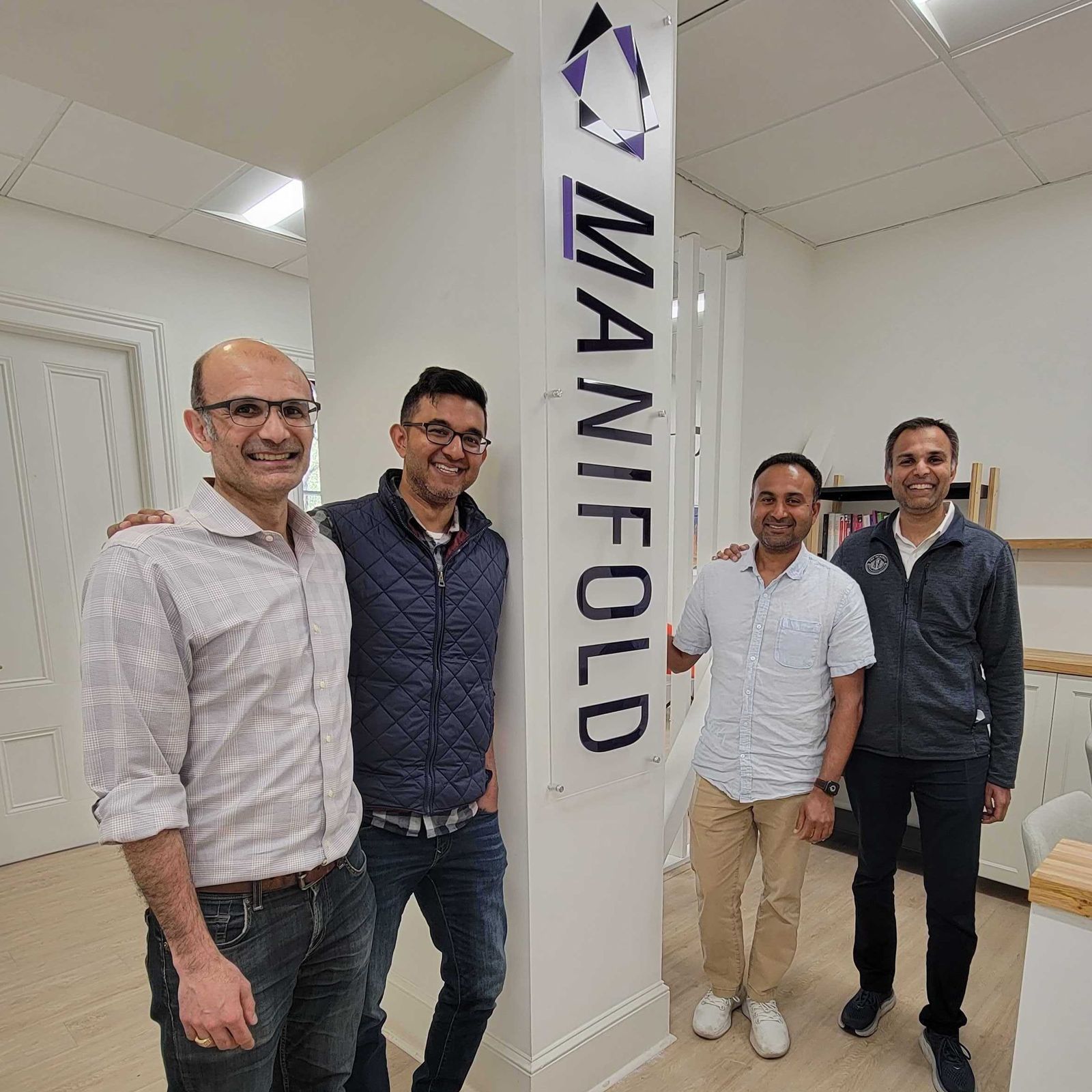
Manifold’s leaders bring a rare blend of technical depth, experience with health data, and humility about the realities of serving complex scientific organizations. They are customer-obsessed, grounded by long-standing relationships in the field, and deeply committed to building with the scientists who rely on their platform:
- CEO Vinay Seth Mohta was formerly the Co-Founder and CTO of Kyrrus, a patient navigation platform. We have also known him for almost a decade as a fellow board member to two different Reach portfolio companies, where his operational expertise and mission alignment were incredibly apparent.
- President Vivek Mohta started his career as a scientist and spent nearly a decade on founding teams of mission-driven organizations with the common theme of accelerating investment in American science and technology, making him a perfect complement to Vinay.
They are joined by exceptional leaders across commercial and technology, including their Chief AI Officer Sourav Dey, CTO Jakov Kucan, SVP of Engineering Jack Walter, Chief Commercial Officer Ash Vijayakanthan, and SVP of Industry Solutions Matt Newman.
Looking Ahead
The needs of life sciences research are growing faster than the systems that support it. Closing that gap will require infrastructure that adapts as quickly as the science itself and tools that give experts the freedom to pursue ideas and questions without friction.
Manifold is building toward that future as the leading AI platform for life sciences, with Agent OS powering how scientific work gets done across data, tools, and teams. We’re excited to support them as they expand their platform, deepen cross-institution collaboration, and help scientific teams move from question to insight with greater speed and clarity.
Read the Latest
News and Insights