Your Voice May Be the Most Scalable Health Sensor Yet
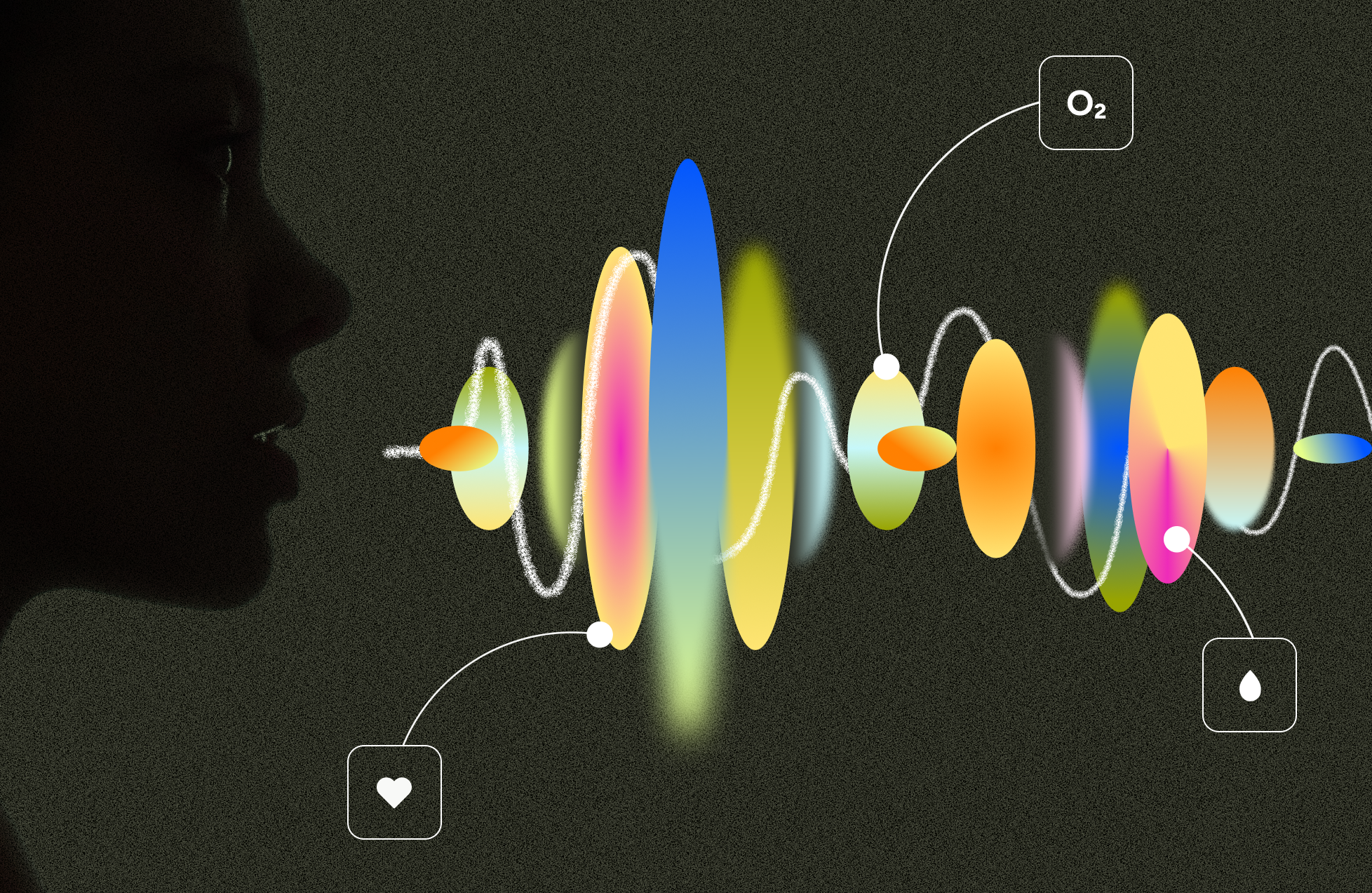
Last year, I felt really sick. I was incredibly fatigued and struggled to stand for more than 30 minutes at a time. But my Whoop recovery score and lab tests all indicated that I was “normal.” While my physiological health indicators suggested I was fine, anyone who I spoke to could tell there was something wrong. There was a change in my voice that signaled something off that eluded my body metrics, which led me to explore whether there was some clinical value hidden in my voice itself.
As it turns out, the answer is yes.
The human voice is one of our oldest and most powerful tools for connection. It helps us to comfort, persuade, embrace, and understand each other. Now, researchers are uncovering how subtle shifts in tone, cadence, and breath patterns can also reveal important clues about our health. What if our voice — one of humanity’s most natural forms of communication, used hundreds of times every day — could help us detect illnesses earlier and better understand our well-being?
The Opportunity in Voice
At Reach, we are excited by founders who are leveraging voice as a biomarker to make care more preventative and holistic.
A biomarker refers to an objective indicator of medical state that can be measured accurately and reproduced to show a snapshot in time of someone’s health. Familiar examples include blood pressure, cholesterol levels, and white blood cell count, which are typically measured through blood draws or physical exams. These traditional biomarkers have transformed medicine, but the procedures are often expensive, invasive (needles!), and limited to hospitals and other clinical settings.
Voice, by contrast, is:
- Non-invasive and ubiquitous: captured naturally through microphones on phones, laptops, or wearables.
- Multisystemic: reflecting the coordination of respiration, phonation, articulation, and brain control, which allows it to monitor a wider array of complex health issues.
- Continuous: capable of being tracked daily, passively, and remotely, in the flow of everyday life.
A growing body of research shows voice analysis is capable of detecting changes in health conditions. Menopause can be predicted early through vocal weakness, informing clinical decisions around the timing and potentially intervention of hormone replacement therapy. Speech changes can precede motor-control loss in Parkinson’s Disease patients by up to a decade. A “vocal jitter” has been linked to depression. And when researchers at the Luxembourg Institute of Health used AI to analyze recordings from 600 individuals, they found it could correctly identify 71% of diabetes cases in men and 66% in women just via voice.
There are now large-scale, multi-institution initiatives such as NIH’s Bridge2AI Voice Consortium that are building the first standardized datasets linking acoustic, linguistic, and respiratory features to clinical outcomes. These efforts only accelerate the market and impact opportunity for leveraging voice as a biomarker. The global voice biomarker market, currently estimated to be worth around $2 billion, is expected to grow to $15 billion by 2033, driven by applications targeting a range of health conditions.
The Challenges
While there are incredible opportunities to leverage voice as a biomarker, there are still some outstanding challenges before it can be deployed at scale.
- Data diversity and quality still remain key bottlenecks. Current datasets, for example, underrepresent non-English speakers and older adults. They also often fail to account for patients with multiple conditions. For instance, a woman may be undergoing menopause and Parkinson’s, both of which impact voice and need to be teased apart.
- There is regulatory ambiguity as most voice models are not FDA approved. And there are still not readily established standards for validation and benchmarking for precision and accuracy.
- We need longitudinal voice data. Voice samples taken at one point in time can show risk trends across groups. But to make individual care reliable, doctors need more samples of a person’s voice over time. The systems required to collect long-term data are only just starting to be built.
That said, there are powerful tailwinds opening up this category. The FDA is starting to evolve its regulatory framework around software as a medical device, and modern AI infrastructure is making it easier than ever before to derive insights from audio data. Companies that leverage these tailwinds will have the potential to build generational businesses.
Where We’re Investing in Voice for Health
As the science matures and voice infrastructure solidifies, three powerful, investable opportunities stand out:
- Twilio for Voice. To bring the vision of using voice for health to fruition, there needs to be an infrastructure layer that includes data pipelines, labeling frameworks, multilingual models, API layers, and compliance rails that can power downstream applications. We need companies that build the voice health stack, similar to the way Twilio enabled SMS or Snowflake enabled cloud-native analytics.
This can include multilingual and condition-specific foundation models, tooling for acoustic and linguistic feature extraction, APIs that make it easy for health apps to plug in voice analytics, and HIPAA/PHI data governance and privacy-preserving processing. Some early companies in this category include Kintsugi, Sonde Health, and Canary Speech. - The New “Recovery Score.” As a loyal Whoop user, I wake up every morning to review my recovery score. Over time, I have learned some interesting insights on what can impact my score and my health.
That said, most of these scores rely on physiology (e.g. HRV, sleep, temperature) and a dedicated wearable. Voice has the opportunity to reimagine the recovery score to capture different and sometimes earlier signals, including cognitive load, stress, respiratory effort, neurological performance, mood, and more. There could be a new consumer company that offers a device-free cheaper alternative to the wearables out in the market, or one that integrates with Oura, Whoop, Garmin or other devices to supercharge their scores. - Clinical Remote Monitoring: Remote patient monitoring (RPM) has exploded in popularity over the last few years, as chronic conditions have become more prevalent, technology advances have made it easier to implement, and the government has made it a reimbursable activity. It also leads to more preventative care that can reduce hospital readmissions and control costs for hospitals.
RPM leveraging voice-based biomarkers has huge potential as it reduces the friction to collect critical data. Voice enables passive, high-frequency monitoring of chronic conditions, especially where symptoms fluctuate daily and early detection matters. Research on voice’s ability to monitor and detect heart failure, COPD/asthma, depression/anxiety, and neurodegenerative diseases is strongest, making them prime conditions to start building for.
The best companies in this space would, of course, have validated data but also build software that easily fits into a clinician’s flow of work and makes it clear when there is a need for intervention. A few companies in this category include Novoic, which helps with early Alzheimer’s detection; Cordio, which helps track patients at risk of congestive heart failure; and Ellipsis, which tracks for fluctuations in mental health.
Listening as the Next Layer of Human Health
In past decades, we learned to “see” health through imaging and “measure” it through wearables. We believe the next frontier is learning to listen. We are looking for founders who will take voice from a health novelty to a mainstream biomarker in everyday care. If you’re building towards this vision, please reach out to jomayra@reachcapital.com!
Read the Latest
News and Insights